Thursday, 29 October 2020

Ten Simple Databricks Notebook Tips & Tricks for Data Scientists

Often, small things make a huge difference, hence the adage that “some of the best ideas are simple!” Over the course of a few releases this year, and in our efforts to make Databricks simple, we have added several small features in our notebooks that make a huge difference.

In this blog and the accompanying notebook, we illustrate simple magic commands and explore small user-interface additions to the notebook that shave time from development for data scientists and enhance developer experience.

Collectively, these enriched features include the following:

  1. %pip install
  2. %conda env export and update
  3. %matplotlib inline
  4. %load_ext tensorboard and %tensorboard
  5. %run auxiliary notebooks to modularize code
  6. Upload data
  7. MLflow: Dynamic Experiment counter and Reproduce run button
  8. Simple UI nuggets and nudges
  9. Format SQL code
  10. Web terminal to log into the cluster

For brevity, we summarize each feature usage below. However, we encourage you to download the notebook. If you don’t have Databricks Unified Analytics Platform yet, try it out here. Import the notebook in your Databricks Unified Data Analytics Platform and have a go at it.

1. Magic command %pip: Install Python packages and manage Python Environment

Databricks Runtime (DBR) or Databricks Runtime for Machine Learning (MLR) installs a set of Python and common machine learning (ML) libraries. But the runtime may not have a specific library or version pre-installed for your task at hand. To that end, you can just as easily customize and manage your Python packages on your cluster as on laptop using %pip and %conda.

Before the release of this feature, data scientists had to develop elaborate init scripts, building a wheel file locally, uploading it to a dbfs location, and using init scripts to install packages. This is brittle. Now, you can use %pip install <package> from your private or public repo.

%pip install vaderSentiment

Alternatively, if you have several packages to install, you can use %pip install -r <path>/requirements.txt.

To further understand how to manage a notebook-scoped Python environment, using both pip and conda, read this blog.

2. Magic command %conda and %pip: Share your Notebook Environments

Once your environment is set up for your cluster, you can do a couple of things: a) preserve the file to reinstall for subsequent sessions and b) share it with others.

Since clusters are ephemeral, any packages installed will disappear once the cluster is shut down. A good practice is to preserve the list of packages installed. This helps with reproducibility and helps members of your data team to recreate your environment for developing or testing. With %conda magic command support as part of a new feature released this year, this task becomes simpler: export and save your list of Python packages installed.

%conda env export -f /jsd_conda_env.yml or %pip freeze > /jsd_pip_env.txt

From a common shared or public dbfs location, another data scientist can easily use %conda env update -f <yaml_file_path> to reproduce your cluster’s Python packages’ environment.

3. Magic command %matplotlib inline: Display figures inline

As part of an Exploratory Data Analysis (EDA) process, data visualization is a paramount step. After initial data cleansing of data, but before feature engineering and model training, you may want to visually examine to discover any patterns and relationships.

Among many data visualization Python libraries, matplotlib is commonly used to visualize data. Although DBR or MLR includes some of these Python libraries, only matplotlib inline functionality is currently supported in notebook cells.

With this magic command built-in in the DBR 6.5+, you can display plots within a notebook cell rather than making explicit method calls to display(figure) or display(figure.show()) or setting spark.databricks.workspace.matplotlibInline.enabled = true.

4. Magic command %tensorboard with PyTorch or TensorFlow

Recently announced in a blog as part of the Databricks Runtime (DBR), this magic command displays your training metrics from TensorBoard within the same notebook. This new functionality deprecates the dbutils.tensorboard.start(), which requires you to view TensorBoard metrics in a separate tab, forcing you to leave the Databricks notebook and breaking your flow.

No longer must you leave your notebook and launch TensorBoard from another tab. The inplace visualization is a major improvement toward simplicity and developer experience.

While you can use either TensorFlow or PyTorch libraries installed on a DBR or MLR for your machine learning models, we use PyTorch (see the notebook for code and display), for this illustration.

%load_ext tensorboard

%tensorboard --logdir=./runs

5. Magic command %run to instantiate auxiliary notebooks

Borrowing common software design patterns and practices from software engineering, data scientists can define classes, variables, and utility methods in auxiliary notebooks. That is, they can “import”—not literally, though—these classes as they would from Python modules in an IDE, except in a notebook’s case, these defined classes come into the current notebook’s scope via a %run auxiliary_notebook command.

Though not a new feature as some of the above ones, this usage makes the driver (or main) notebook easier to read, and a lot less clustered. Some developers use these auxiliary notebooks to split up the data processing into distinct notebooks, each for data preprocessing, exploration or analysis, bringing the results into the scope of the calling notebook.

Another candidate for these auxiliary notebooks are reusable classes, variables, and utility functions. For example, Utils and RFRModel, along with other classes, are defined in auxiliary notebooks, cls/import_classes. After the %run ./cls/import_classes, all classes come into the scope of the calling notebook. With this simple trick, you don’t have to clutter your driver notebook. Just define your classes elsewhere, modularize your code, and reuse them!

6. Fast Upload new data

Sometimes you may have access to data that is available locally, on your laptop, that you wish to analyze using Databricks. A new feature Upload Data, with a notebook File menu, uploads local data into your workspace. The target directory defaults to /shared_uploads/your-email-address; however, you can select the destination and use the code from the Upload File dialog to read your files. In our case, we select the pandas code to read the CSV files.

Once uploaded, you can access the data files for processing or machine learning training.

A new feature Upload Data, with a notebook File menu, uploads local data into your workspace.

7.1 MLflow Experiment Dynamic Counter

The MLflow UI is tightly integrated within a Databricks notebook. As you train your model using MLflow APIs, the Experiment label counter dynamically increments as runs are logged and finished, giving data scientists a visual indication of experiments in progress.
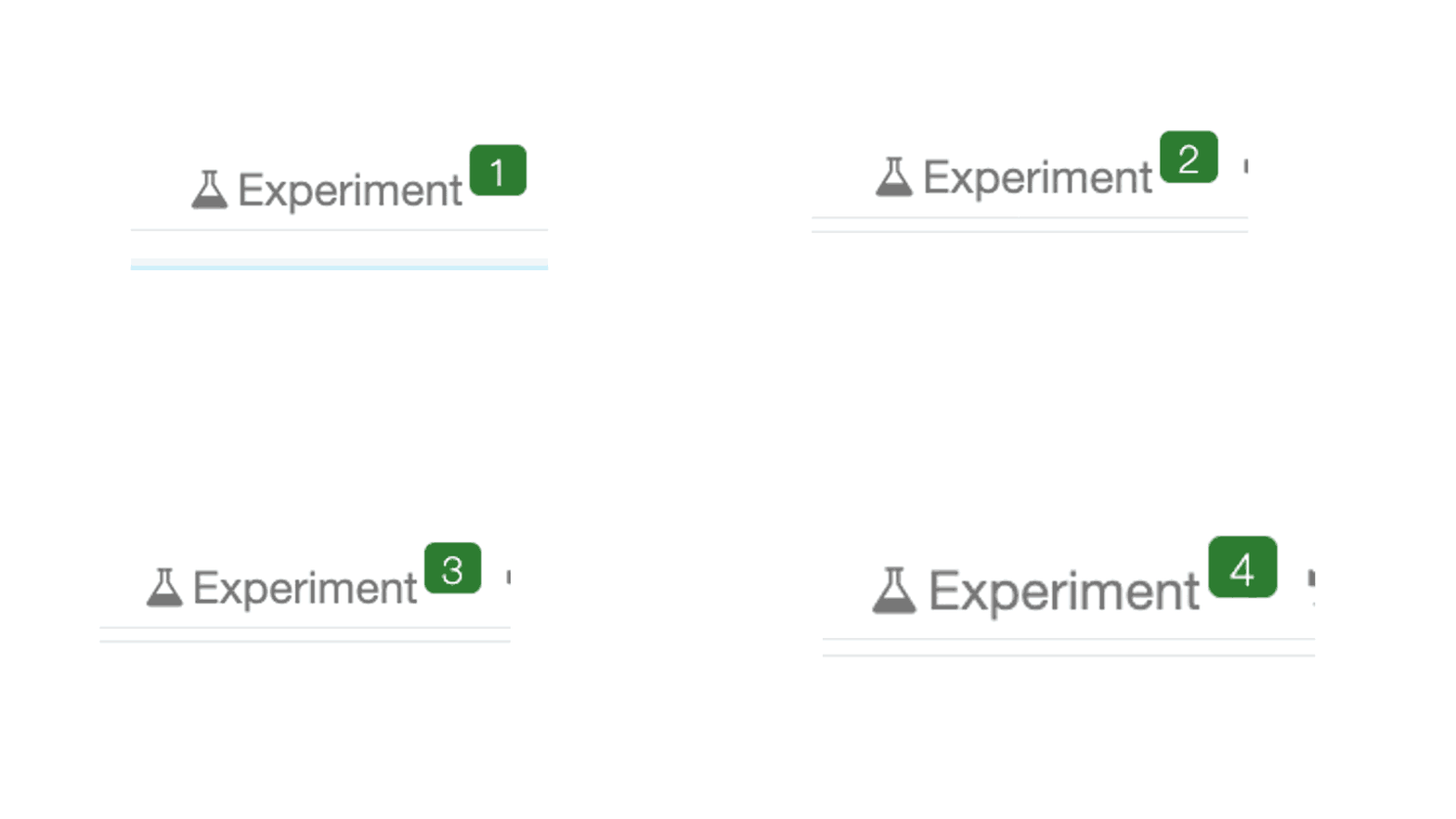
By clicking on the Experiment, a side panel displays a tabular summary of each run's key parameters and metrics, with ability to view detailed MLflow entities

By clicking on the Experiment, a side panel displays a tabular summary of each run’s key parameters and metrics, with ability to view detailed MLflow entities: runs, parameters, metrics, artifacts, models, etc.

7.2 MLflow Reproducible Run button

Another feature improvement is the ability to recreate a notebook run to reproduce your experiment. From any of the MLflow run pages, a Reproduce Run button allows you to recreate a notebook and attach it to the current or shared cluster.
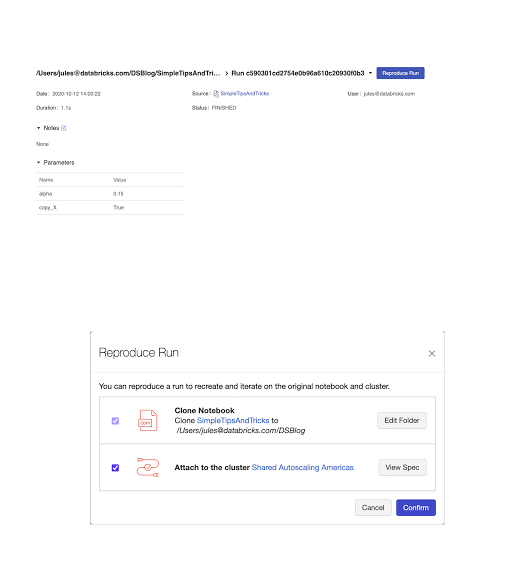
Another feature improvement is the ability to recreate a notebook run to reproduce your experiment

8. Simple UI nuggets and task nudges

To offer data scientists a quick peek at data, undo deleted cells, view split screens, or a faster way to carry out a task, the notebook improvements include:

Light bulb hint for better usage or faster execution: Whenever a block of code in a notebook cell is executed, the Databricks runtime may nudge or provide a hint to explore either an efficient way to execute the code or indicate additional features to augment the current cell’s task. For example, if you are training a model, it may suggest to track your training metrics and parameters using MLflow.

Databricks’ notebooks include pop-up hints and tips, such as suggesting the use of MLflow to track training metrics and parameters, to promote better usage or faster execution.

Or if you are persisting a DataFrame in a Parquet format as a SQL table, it may recommend to use Delta Lake table for efficient and reliable future transactional operations on your data source. Also, if the underlying engine detects that you are performing a complex Spark operation that can be optimized or joining two uneven Spark DataFrames—one very large and one small—it may suggest that you enable Apache Spark 3.0 Adaptive Query Execution for better performance.

These little nudges can help data scientists or data engineers capitalize on the underlying Spark’s optimized features or utilize additional tools, such as MLflow, making your model training manageable.

Undo deleted cells:  How many times you have developed vital code in a cell and then inadvertently deleted that cell, only to realize that it’s gone, irretrievable. Now you can undo deleted cells, as the notebook keeps tracks of deleted cells.
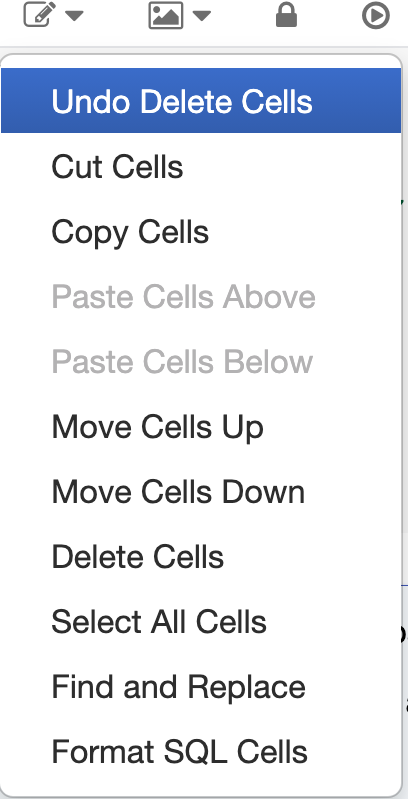
Databricks’ notebooks include a short-cut undo feature that allows you to ‘Undo’ deleted cells at the click of a button.

Run All Above: In some scenarios, you may have fixed a bug in a notebook’s previous cells above the current cell and you wish to run them again from the current notebook cell. This old trick can do that for you.
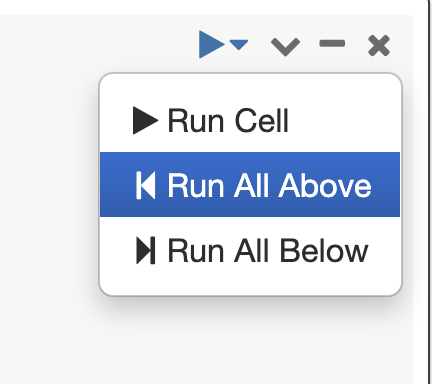
Another Databricks’ notebook short-cut allows you to easily rerun previously executed commands, such as bug fixes, in previous  cells.

Tab for code completion and function signature: Both for general Python 3 functions and Spark 3.0 methods, using a method_name.tab key shows a drop down list of methods and properties you can select for code completion.
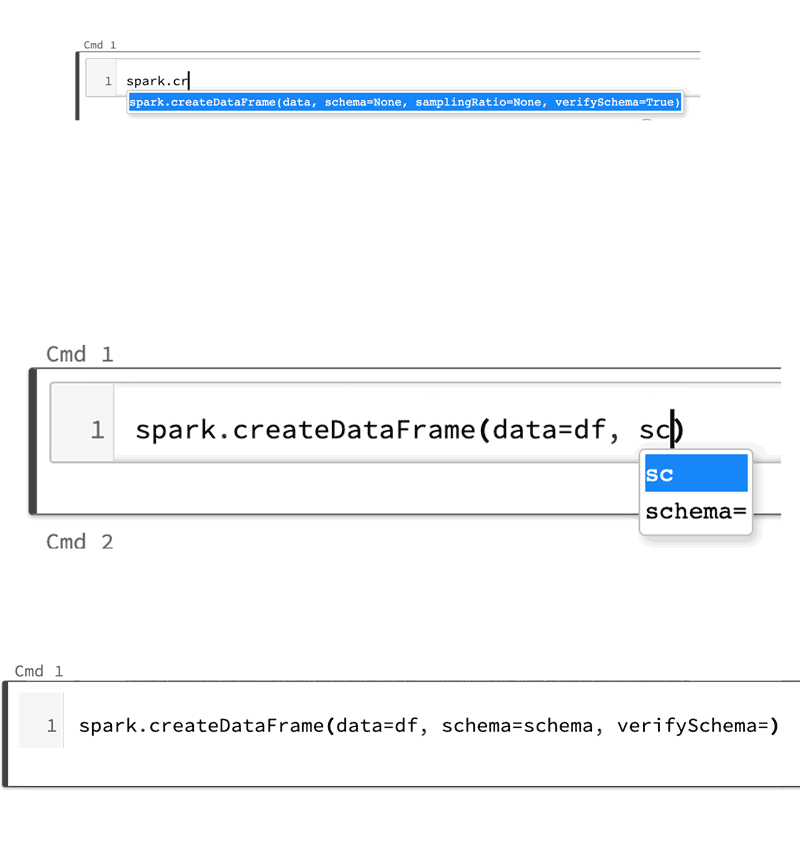
Tab for code completion and function signature

Use Side-by-Side view:

As in a Python IDE, such as PyCharm, you can compose your markdown files and view their rendering in a side-by-side panel, so in a notebook. Elect the View->Side-by-Side to compose and view a notebook cell.
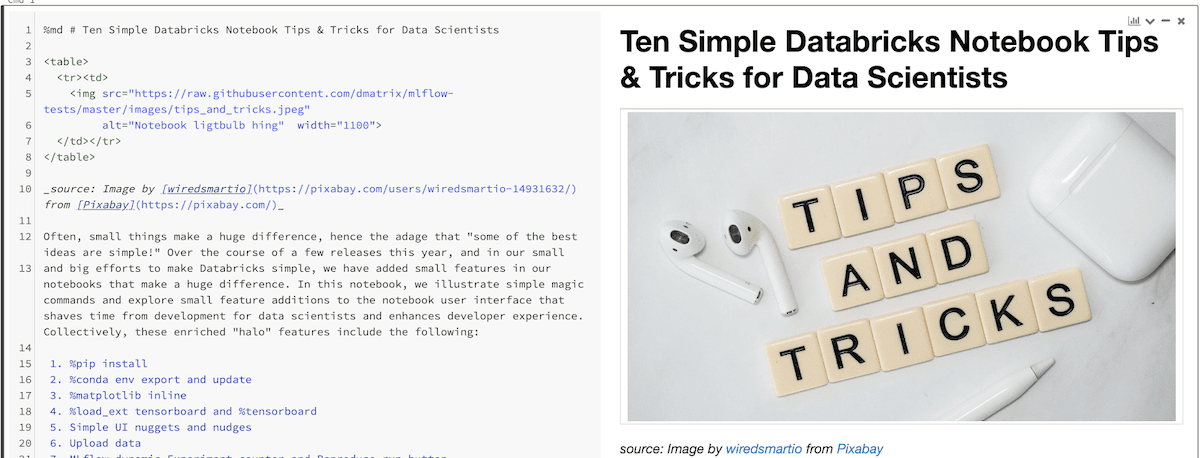
With Databricks’ notebooks you can, as in a Python IDE and PyCharm, compose your markdown files and view their rendering in a side-by-side panel.

9. Format SQL code

Though not a new feature, this trick affords you to quickly and easily type in a free-formatted SQL code and then use the cell menu to format the SQL code.
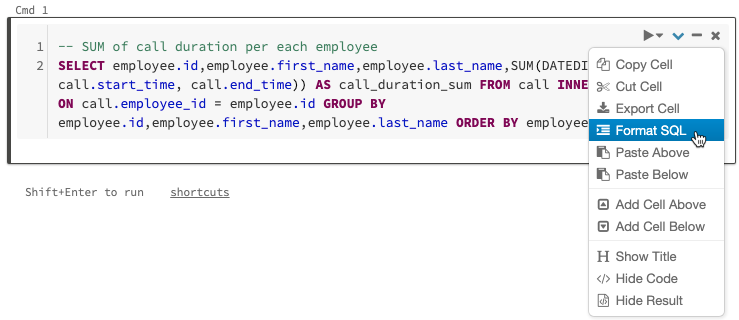
With Databricks’ notebooks you can quickly and easily type in a free-formatted SQL code and then use the cell menu to format the SQL code.

10. Web terminal to log into the cluster

Any member of a data team, including data scientists, can directly log into the driver node from the notebook. No need to use %sh ssh magic commands, which require tedious setup of ssh and authentication tokens. Moreover, system administrators and security teams loath opening the SSH port to their virtual private networks. As a user, you do not need to setup SSH keys to get an interactive terminal to a the driver node on your cluster. If your Databricks administrator has granted you “Can Attach To” permissions to a cluster, you are set to go.

Announced in the blog, this feature offers a full interactive shell and controlled access to the driver node of a cluster. To use the web terminal, simply select Terminal from the drop down menu.
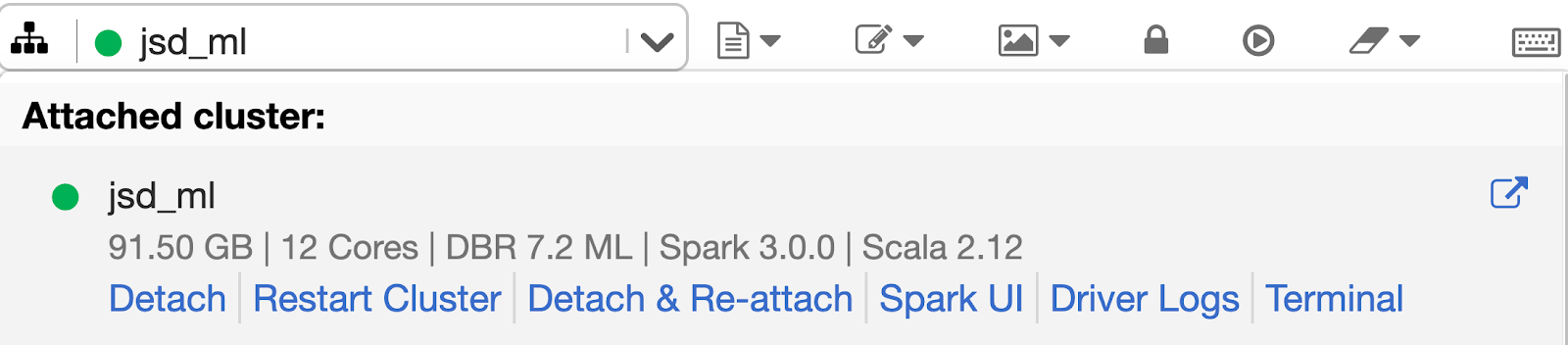
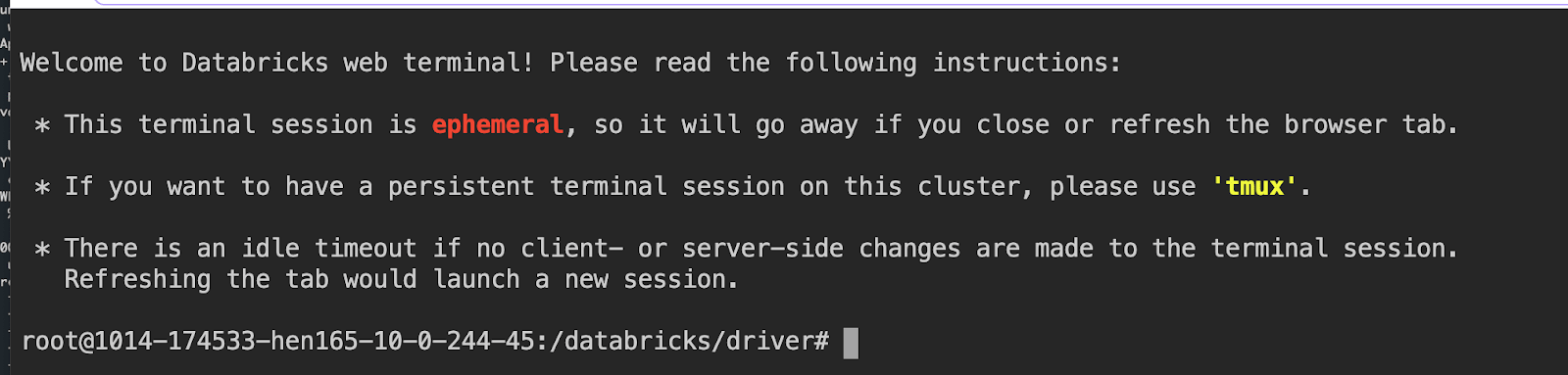
Databricks’ notebooks provides any member of the data team full access to the interactive shell and controlled access to the driver node of a cluster via a simple drop-down menu.

Collectively, these features—little nudges and nuggets—can reduce friction, make your code flow easier, to experimentation, presentation, or data exploration. Give one or more of these simple ideas a go next time in your Databricks notebook.

Download the notebook today and import it to Databricks Unified Data Analytics Platform (with DBR 7.2+ or MLR 7.2+)  and have a go at it.

To discover how data teams solve the world’s tough data problems, come and join us at the Data + AI Summit Europe.

--

Try Databricks for free. Get started today.

The post Ten Simple Databricks Notebook Tips & Tricks for Data Scientists appeared first on Databricks.


TikTok owner ByteDance launches education technology brand Dali for China

By Yingzhi Yang and Brenda Goh
BEIJING (Reuters) - Beijing-based ByteDance announced a standalone education technology (edtech) brand Dali for the Chinese market on Thursday, becoming another major tech player looking to capitalise on the sector's boom driven by the COVID-19 pandemic.
Dali, meaning “forceful strength” in Chinese, will host all the education business of ByteDance and already has 10,000 employees, Dali Chief Executive Chen Lin told a press conference in Beijing.
ByteDance founder and chief executive Zhang Yiming said in a statement: “We started to develop interests in the education industry very early on. The brand independence of Dali Education is just the beginning of a long journey.”
Demand for education technology grew during the coronavirus pandemic as widespread lockdowns in China and school closures forced students to take online classes ...


Read More on Datafloq

Spotify adds more subscribers as music streaming gets back on track

STOCKHOLM/NEW YORK (Reuters) - Spotify Technology SA on Thursday added more subscribers in the third quarter than Wall Street had expected and forecast strong growth in the current quarter as more users tuned in to its streaming music service.
With more than double the number of subscribers than its nearest rival Apple Music, Spotify has been expanding rapidly in markets across Europe after launching in India and the Middle East last year.
Premium subscribers, which account for most of its revenue, were up 27% to 144 million from a year earlier. Analysts on average were expecting the company to have 142.5 million paid subscribers, according to IBES data from Refinitiv.
The company expects total premium subscribers in the range of 150 million to 154 million for the fourth quarter. Analysts were expecting it to hit 151.5 million.
...


Read More on Datafloq

EU court sets conditions for EU antitrust regulators to access Facebook documents

BRUSSELS (Reuters) - EU antitrust regulators can access some Facebook <FB.O> documents under certain conditions, Europe's second-top court said on Thursday in a case triggered by what the U.S. social media giant says are excessive demands for data.
The Luxembourg-based General Court said Facebook will transmit requested documents related to its business activities to the European Commission.
"Those documents shall then be placed in a virtual data room which shall be accessible to as limited a number as possible of members of the team responsible for the investigation, in the presence (virtual or physical) of an equivalent number of Facebook Ireland's lawyers," the court said.

(Reporting by Foo Yun Chee; Editing by Jon Boyle)
...


Read More on Datafloq

Tougher new rules for tech giants, more power to enforcers: EU's Vestager

By Foo Yun Chee
BRUSSELS (Reuters) - Tech giants will have to do more to weed out illegal and harmful content while online gatekeepers will be bound by a list of dos and don'ts under new rules aimed at reining in their power, Europe's antitrust chief said on Thursday.
European Competition Commissioner Margrethe Vestager also proposed new powers for enforcers to tackle market failures in digital markets and to stop new ones from emerging.
Under the proposed Digital Services Act, online platforms will have to check sellers' identities before they can use their services in a move aimed at countering illegal and dangerous content.
The tech companies will have to produce reports on their actions and inform users who pays for the advertisements that they see and why they have been targeted by certain ...


Read More on Datafloq

Huawei lawyers to question Canada border official in fourth day of Meng U.S. extradition case

By Moira Warburton
(Reuters) - In a case dating back two years, lawyers for Huawei Chief Financial Officer Meng Wanzhou on Thursday will resume questioning a Canada border officer who intercepted Meng before the federal police arrested her.
Scott Kirkland, an officer with the Canada Border Services Agency (CBSA), told a Vancouver court on Wednesday he was worried about allegations being brought of potential civil rights violations if the agency intercepted and interviewed Meng before her arrest by Canadian police.
Meng, 48, was arrested at Vancouver International Airport in December 2018 while on a layover bound for Mexico. The United States charged her with bank fraud, accusing her of misleading HSBC about Huawei Technologies Co Ltd's business dealings in Iran and causing the bank to break U.S. sanctions.
She has said she is ...


Read More on Datafloq

Nvidia targets Arm's customer network, CEO tells SoftBank's Son

By Sam Nussey
TOKYO (Reuters) - The chief executive of Nvidia Corp <NVDA.O> said his planned acquisition of Arm from SoftBank Group Corp <9984.T> cost an "arm and a leg," but that the chip designer's valuable network of customers made it worthwhile.
Japanese tech conglomerate SoftBank announced in September it would sell Arm to U.S. chip designer Nvidia for $40 billion as it builds a cash pile through asset disposal.
"I had to pay you an arm and a leg for it," Jensen Huang told SoftBank CEO Masayoshi Son in a pre-recorded conversation at annual conference SoftBank World.
Huang, wearing his trademark leather jacket and sat before a fire, said Arm's customer network is its most valuable asset, and that he wants to bring Nvidia's artificial intelligence technology to those customers.
...


Read More on Datafloq

Microsoft detects cyberattacks from Iran-linked actor engaged in intelligence collection

(Reuters) - Microsoft Corp <MSFT.O> said on Wednesday that it detected and attempted to stop a series of cyberattacks from Phosphorus, which the company described as an 'Iranian actor', with the attacks aimed to target over 100 high-profile individuals.
"Phosphorus, an Iranian actor, has targeted with this scheme potential attendees of the upcoming Munich Security Conference and the Think 20 (T20) Summit in Saudi Arabia", Microsoft said in a blog, adding it believed Phosphorus is engaging in these attacks for intelligence collection purposes. https://bit.ly/2HHrz0Q


(Reporting by Kanishka Singh; Editing by Shri Navaratnam)
...


Read More on Datafloq

Court rules that California Uber drivers could not establish 'political coercion'

(Reuters) - A California court on Wednesday denied an application for a temporary restraining order by the state's Uber Technologies Inc <UBER.N> drivers, saying the drivers could not establish the alleged "political coercion" by the ride-hailing company.
The drivers had last week sued Uber over in-app messages regarding an upcoming gig worker ballot measure that the drivers say violates a California law protecting their political rights.
The lawsuit had said that Uber was unlawfully pressuring drivers via the app to support the Nov. 3 company-sponsored ballot measure, known as Proposition 22. Uber had rejected those claims.
"The application for a temporary restraining order is denied", Richard Ulmer, judge of Superior Court of California for San Francisco County, said in his order.
The request for "extraordinary injunctive relief" is belated, the judge wrote, adding that ...


Read More on Datafloq

Samsung Elec sees profit decline on weak server chip demand after strong third-quarter earnings

By Joyce Lee and Hyunjoo Jin
SEOUL (Reuters) - Samsung Electronics Co Ltd <005930.KS> said on Thursday it expects fourth-quarter profit to fall due to weak server chip demand and rising smartphone competition, after posting its best quarterly operating profit in two years in the third quarter.
The world's top maker of smartphones and memory chips flagged a recovery in the mobile and chip markets next year although it was wary of disruption from the coronavirus pandemic and U.S.-China trade tensions in the short-term.
"Global demand is forecast to increase year on year, but uncertainties are unlikely to ease given the possibility of additional waves of the pandemic," Ben Suh, Samsung's executive vice president of investor relations, said in an earnings call.
Samsung said mobile chip demand would rise in the fourth quarter, ...


Read More on Datafloq

Ant Group curbs support for overseas partners in strategy rethink ahead of listing

By Fanny Potkin
SINGAPORE (Reuters) - China's Ant Group Co Ltd <688688.SS> <6688.HK> has been cutting funding and staff support to many of the overseas e-wallet firms it has invested in as it pivots away from earlier ambitions of becoming a global payments leader, people with knowledge of the matter told Reuters.
The shift in strategy by the Alibaba-backed <BABA.N> <9988.HK> fintech giant came late in 2019, brought on by a change at the helm and a reworking of priorities as it planned for its IPO and grappled with regulatory challenges at home.
It has made large cuts to the hundreds of millions of dollars it spent each year to subsidise user growth at overseas e-wallet firms offering digital payment and other financial services, and is repatriating Ant staffers, according to more than a dozen executives who work or have worked with Ant in nine countries.
...


Read More on Datafloq

Lawmakers ask if White House pressured FCC on social media rules

By David Shepardson
WASHINGTON (Reuters) - Two key U.S. House Democratic lawmakers on Wednesday asked Federal Communications Commission Chairman Ajit Pai if the White House was involved in his decision to move forward with new regulations limiting key social media legal protections.
Representatives Frank Pallone and Mike Doyle demanded Pai disclose if he had any contact with the White House or President Donald Trump's re-election campaign before his announcement.
Pai did not respond to a request for comment Wednesday but told reporters Tuesday he did not feel any pressure from the White House. He did not directly address a question from Reuters about whether he or his staff had any contact with the White House ahead of his announcement.
Pallone, the chairman of the Energy and Commerce Committee, and Doyle, who heads a panel ...


Read More on Datafloq

Pinterest projects 60% sales growth in fourth-quarter as ad sales rebound

By Munsif Vengattil
(Reuters) - Image-sharing company Pinterest Inc <PINS.N> projected a 60% sales growth for the current quarter, off the back of a healthy rebound in ad spending by businesses after the early months of COVID-19 pandemic wreaked havoc in the industry.
The forecast, which the company termed an 'informal' one, compares to a 35% growth modeled by Wall Street analysts, according to Refinitiv data.
Shares of the company, which also beat third-quarter sales estimates, jumped 28% to $63.05 in extended trading.
Pinterest said it benefited as advertisers redirected spending to its platform following a social media ad boycott campaign that began in July.
A long list of companies have pulled advertising from Facebook Inc <FB.O>, in support of a ...


Read More on Datafloq

FBI warning played a role in Facebook downplaying NY Post report, Zuckerberg says

WASHINGTON (Reuters) - Facebook Inc Chief Executive Mark Zuckerberg said on Wednesday that a warning from the FBI on hack-and-leak operations before the Nov. 3 presidential election played a role in its decision to limit the reach of stories from the New York Post that made claims about Democratic presidential candidate Joe Biden's son.
Zuckerberg said it had seen attempts by Russia, Iran and China to run disinformation campaigns. "One of the threats that the FBI has alerted our companies ... to was the possibility of a hack and leak operation in the days or weeks leading up to this election," he said.
"So you had both public testimony from from the FBI, (inaudible) in private meetings alerts that were given to at least our company, I assume the others as well, that suggested that we be on high alert and sensitivity that if a trove of documents appeared that that we should view that with suspicion that it might ...


Read More on Datafloq

EBay beats quarterly profit estimates, forecasts current-quarter sales above expectations

(Reuters) - EBay Inc's <EBAY.O> quarterly profit topped Wall Street expectations on Wednesday and the e-commerce company forecast fourth-quarter sales above estimates, as people staying at home due to the COVID-19 pandemic took to online shopping.
EBay said it expects fourth-quarter revenue in the range of $2.64 billion to $2.71 billion, while analysts estimate $2.54 billion, according to IBES data from Refinitiv.
E-commerce firms and retailers with a strong online presence have witnessed a spike in demand as the COVID-19 pandemic has led more people to shop online.
The company raised its full-year sales outlook to between $10.04 billion and $10.11 billion. The forecast excludes the classifieds business, which eBay in July agreed to sell to Norway's Adevinta <ADEV.OL> in a $9.2 billion deal.
...


Read More on Datafloq

SoftBank attempted to delay WeWork's $3 billion share purchase: court filing

By Joshua Franklin and Anirban Sen
(Reuters) - SoftBank Group <9984.T> CEO Masayoshi Son told the executive he tasked to turn around WeWork after its botched initial public offering to "use whatever excuse" to delay a $3 billion payout to the office-sharing startup's shareholders, a court transcript released on Wednesday showed.
The transcript, part of a Delaware court filing, provides new details on the decision by SoftBank to scrap a $3 billion tender offer to repurchase stock from existing shareholders, including founder Adam Neumann and employees.
A WeWork board committee that negotiated the tender offer sued SoftBank in April over that decision, accusing the Japanese company of "buyer's remorse" amid the coronavirus outbreak.
The transcript includes an undated text exchange between Son and Marcelo Claure, who he installed as WeWork's executive ...


Read More on Datafloq

2020 Elections: Governance Board and Officer candidates

As you probably know, in a few weeks we will have the Jenkins 2020 elections. We will be electing two governance board members and five officers, namely: Security, Events, Release, Infrastructure, and Documentation. After the announcement on Sep 24, we have been accepting nominations from community members.

After the processing and confirmations with potential candidates, the Jenkins 2020 Elections committee is happy to announce the candidates for the Jenkins Governance Board and Officer roles:

  • Governance Board candidates: Andrey Falko, Ewelina Wilkosz, Frederic Gurr, Gavin Mogan, Justin Harringa, Mark Waite, Marky Jackson, Steven Terrana, Zhao Xiaojie (Rick)

  • Release officer: Baptiste Mathus, Tim Jacomb, Victor Martinez

  • Security officer: Daniel Beck (uncontested)

  • Events officer: Marky Jackson (uncontested)

  • Infrastructure Officer: Olivier Vernin (uncontested)

  • Documentation officer: Mark Waite (uncontested)

We encourage all community members to support the candidates and to participate in the elections!

Key dates

  • Nov 08 - Voting sign-up is over.

  • Nov 10 - Voting begins. Condorcet Internet Voting Service will be used for voting.

  • Nov 27 - Voting ends, 11PM UTC.

  • Dec 03 - Election results are announced and take effect.

Signing up for voting

Any Jenkins individual contributor is eligible to vote in the election if there was a contribution made before September 01, 2020. Contribution does not mean a code contribution, all contributions count: documentation patches, code reviews, substantial issue reports, issues and mailing list responses, social media posts, testing, etc. Such a contribution should be public.

You can register to vote in one of two ways:

  1. Fill out this Google Form. This way requires logging into your Google Account to verify authenticity.

  2. Send an email to jenkins-2020-elections@googlegroups.com. You will need to provide the information specified here.

Once sign-up is over, the election committee will process the form submissions and prepare a list of the registered voters. In the case of rejection, one of the election committee members will send a rejection email. Every individual contributor is expected to vote only once.

Candidates

Below you can find statements, affiliations and profile links provided by the candidates.

Minimum copy-editing was applied to the content by the Jenkins 2020 Elections Committee. Candidates are sorted by the first name.

Governance Board

Andrey Falko

I have been a Jenkins user and administrator on and off since around 2010. In 2016, I got into evangelism by organizing a Jenkins Area Meetup in San Francisco. I spoke at Jenkins World 2017  and again at Jenkins World 2018. Justin Harringa and I wrote and open sourced the Config Driven Pipeline Plugin. For two years running, I’ve been a mentor for two Google Summer of Code projects: External Fingerprint Storage Project and Remoting over Apache Kafka with Kubernetes features.

With this nomination, I hope to continue helping strengthen and progress the community further. As a member of the governance board, I’ll bring a fresh perspective by asking questions, providing feedback, and finding opportunities for others to contribute.

Profile links: GitHub, LinkedIn

Affiliations: Stripe

Ewelina Wilkosz

As a consultant I support my customers with their Jenkins issues since the beginning of 2017. And almost from the start it was some kind of "as code" approach. The experience I gained during that time resulted in getting myself involved in the development of Configuration as Code Plugin for Jenkins. I consider becoming a part of Jenkins Community one of the most valuable experiences in my career so far. I appreciate how much I have learned and how welcoming the community is.

I am not a very active contributor these days, at least when it comes to code, but what I have to offer is rather extensive experience with Jenkins end users - from small, single instance setups to environments with hundreds of controllers run in a different way on different operating systems. Every day I see pains those users go through, I know what issues they are facing and which features they consider valuable or missing. As a Jenkins Governance Board Member I can represent those users.

Thanks to my involvement in Configuration as Code Plugin development I had a chance to deliver a number of public presentations where I focused on the benefits of the solution and tried to make it easier for newcomers to try it. Here are a few examples of my activities related to Jenkins Configuration as Code: blogpost, cdCON presentation, podcast recording. So my focus is not only on representing users but also on educating them, and educating myself, so I actually know what they need and why.

Profile links: GitHub, LinkedIn, Twitter

Affiliations: Eficode (former Praqma)

Frederic Gurr

I started to use Jenkins back in 2008, when it still had a different name. In 2011 I started to contribute and created my first little plugin called extra-columns. Since then, using and administering Jenkins servers has become a major part of my work life, while getting involved with the Jenkins community kickstarted my interest and involvement with open source software and communities.

I’ve been working as a release engineer at the Eclipse Foundation since 2016, supporting 250+ Jenkins instances for various open source projects. I’d be honored to bring a user and admin oriented perspective to the Governance Board and help shape the future of Jenkins.

Profile links: GitHub, Twitter

Affiliations: Eclipse Foundation

Gavin Mogan

I got started with Jenkins early on when I was just getting started with testing. I knew there had to be a way to run the tests automatically and report on them back to people. I started hacking my own tools before I came across Jenkins (then Hudson) and was hooked ever since. Over the years I’ve managed to install and configure Jenkins at various jobs, and even was employed making internal and external plugins and integrations. You’ll often find me on the Jenkins IRC and Gitter channels as well as the subreddit giving a hand to people who are stuck. I also try to get involved with Jenkins Infrastructure projects as much as I can. I currently maintain the plugin site, plugin site API, Jenkins Wiki exporter, and a bunch of other minor projects. I also help run Vancouver’s chapter of Nodeschool.

If elected, I would like to address improving commercial support avenues. Right now it’s a lot of people flailing in isolation. I would like to not only improve things so people can find easier ways to get help, but also encourage more users to help others, and push for a centralized source of companies providing commercial support.

Profile links: GitHub, Twitter

Affiliations: Digital Ocean, Nodeschool Vancouver

Justin Harringa

The nomination is quite an honor for me. I have been a Hudson/Jenkins user since around 2009/2010 when I started working through driving continuous integration in a corporate environment at John Deere. As time went on, I began contributing some small fixes to plugins such as the Job DSL Plugin, OpenID Plugin, and the Workflow Job Plugin. Eventually, I ended up helping maintain Salesforce’s Chatter plugin and then open sourcing plugins such as the Config-Driven Pipeline Plugin with Andrey Falko. More recently, I have also had the extreme pleasure of mentoring in 2 Jenkins projects for Google Summer of Code (Multi-branch Pipeline support for Gitlab in 2019 and Git Plugin Performance Improvements in 2020).

I have learned so much from working with Jenkins and I would love to give back to the project further. Having introduced Jenkins at both small and large companies, I would love to help contribute to the direction of the project through the Roadmap/SIGs/JEPs and encourage others to also contribute / improve Jenkins.

Profile links: GitHub, Twitter, LinkedIn

Affiliations: Salesforce, Spinnaker SIG for Azure

Mark Waite

I’m a Jenkins contributor, a member of the Jenkins core team, one of the leaders of the Platform Special Interest Group, and leader of the Documentation Special Interest Group. I’ve served as the Jenkins Documentation Officer since 2019. I was a mentor for Google Season of Code 2020 and am one of the maintainers of the Git plugin for Jenkins.

If elected and allowed to serve on the Jenkins Board, I’ll work to increase community involvement and community development. I’m deeply interested in tooling and environments that support the Jenkins project, including the Jenkins CI environments, issue tracker, artifact repository, and source code repositories.

Profile links: GitHub, Twitter, LinkedIn, Jenkins Blog

Affiliations: CloudBees

Marky Jackson

I have been involved in the Jenkins project for many years. I started out as a plugin maintainer, SIG member and general helper. I moved to a SIG lead, speakers and Google Summer of Code and Docs org admin and mentor. My current goals are to help continue the work of the public roadmap as well and gain most community members by continuing to be a champion of the community.

For me, being on the Jenkins Board is another opportunity to improve upon the great work we have all done as well as work toward branching out our efforts to have more women, people of color and LGBTQIA members. I would be honored to have this opportunity.

Profile links: GitHub, Twitter, LinkedIn, Jenkins Blog

Affiliations: OpsMx, Continuous Delivery Foundation, Kubernetes, Ortelius, Spinnaker

Steven Terrana

I have been a Jenkins user since 2017 and contributor since 2018. I am the primary maintainer of the Jenkins Templating Engine, a plugin that allows users to create truly templated Jenkins pipelines that can be shared across teams. Through that work, I’ve had the great pleasure of helping to organize the Pipeline Authoring Special Interest Group, contributing to the Jenkins Pipeline documentation, and contributing bug fixes to various plugins (including the pipeline plugin and workflow-cps library).

As a Continuous Delivery Foundation Ambassador, I’ve enjoyed doing what I can to advance the community’s approach to CI/CD and simplifying DevSecOps adoption within large organizations. It would be a privilege to serve on the Jenkins Governance Board and offer my support wherever I can.

Profile links: Twitter, LinkedIn

Affiliations: Booz Allen Hamilton, Continuous Delivery Foundation

Zhao Xiaojie (Rick)

Three years ago I joined the Jenkins community. I learned a lot during the process of contributing. I even became a Jenkins hero in my city. The most exciting thing I want to do is help more new users of Jenkins get started, and let more contributors feel comfortable. I always love to host a JAM no matter if it’s online or offline.

Plans: improve the experience of using Jenkins in different countries; reorganize the knowledge of Jenkins, for example the tutorial by text or video format; help other SIG leaders to organize meetings.

Profile links: GitHub, Twitter

Affiliations: N/A

Release Officer

Baptiste Mathus

I have been using and contributing to Jenkins for so long that it is difficult for me to check when it started exactly. My first pull-request to Jenkins was in 2011 and I had started to use it long before it. Throughout the years, I have contributed to various areas: created our local Jenkins Area Meetup with Michaël Pailloncy, helped users and developers on our mailing lists and IRC channels, contributed to the Jenkins infrastructure, the website, processing plugins hosting requests, worked full time on Jenkins Evergreen, and I am still present today.

For all these reasons, it would be an honor to serve as the Release Officer for the Jenkins Project.

Profile links: Twitter, Jenkins Blog

Affiliations: CloudBees

Tim Jacomb

I have been a user of Jenkins for the last 8 years and a regular contributor since 2018. I began with maintaining the Slack plugin and over the last couple of years I have since expanded that to many more plugins and the Jenkins core. These are some of the components I maintain when I have time: Slack, Azure Key Vault, Junit, most of the Database plugins, Dark theme, Plugin installation manager, Jenkins Helm chart, Configuration as code plugin. I am also a member of the Jenkins infrastructure team, and I was involved in the release automation project and the mirrors modernisation effort, along with the day to day support helping people regain access to accounts etc.

As a Release Officer I would like to increase automation, ease onboarding of new contributors to the release team, and ensure that responsibilities rotate among people so that I wouldn’t be a bottleneck for any task.

Profile links: Twitter, Jenkins Blog

Affiliations: Kainos

Victor Martinez

I have been involved in the Jenkins project since 2011 by different means, as a user, as an administrator, as a contributor (bug reporting, plugin development, documentation, hackfest), being active in the different Jenkins forums such as the Jenkins-dev and Jenkins-user mailing lists, working with the jenkins-infra shared library and so on. I’m also an advocate for the Jenkins project through some presentations anytime that I had the opportunity such as DevOps World 2020 and Jenkins World 2017.

I’ve been happily nominated for the Release officer role which matches not just my area of professional expertise that I’ve been doing for the last 14 years in different roles for different companies but also that’s an area of personal interest where I’d like to spend time with the Jenkins community to understand, document and automate the process in a way we can keep the project sustainable for a long term as it’s today, it’s not just about what I can bring for the community but also about growing together.

If elected as a Release officer I would aim to focus on the following areas: proceed with the existing responsibilities for this role; document and automate the release process; being an enabler for the Continuous Delivery not just for the plugins but also for the core.

Profile links: Twitter, LinkedIn

Affiliations: Elastic

Security Officer - uncontested

Daniel Beck

I’ve been a Jenkins user since 2011, contributor since 2013, and core maintainer since 2014. In 2015, I took on the scheduling and authoring of security advisories and have been doing that ever since, working with reporters, maintainers, and the Jenkins security team to deliver security fixes. Beyond that, I regularly contribute to Jenkins and project infrastructure.

Since I’ve started in the Security Officer role, we’ve made significant improvements: Plugins no longer allow ordinary users to run arbitrary scripts (no sandbox!) as a regular feature. I introduced fine-grained permission management for our GitHub repositories and the Maven repository hosting our releases. Warnings directly in Jenkins inform admins when an installed component has known security issues (and their UX was improved earlier this year). The Jenkins project  is now a CVE Numbers Authority, to ensure timely and high-quality information in the CVE vulnerability database. Working with Tyler, I added telemetry to Jenkins, which allowed us to deliver multiple large-scale security fixes with minimal impact. More recently, I’ve started writing code scanning rules for common problems in Jenkins and invited maintainers to sign their plugins up, which is something I hope to properly publish and roll out more widely soon.

Profile links: GitHub Jenkins Blog

Affiliations: CloudBees

Events Officer - uncontested

Marky Jackson

I have been a part of the Jenkins community for some time, and I have received the utmost joy in volunteering. I have been extremely fortunate to have played a lead role in the Outreach & Advocacy SIG, the pipeline-Authoring SIG, and, most recently, the Cloud-Native SIG. I have taken part in many meetups, org admin, and mentor in the GSoC & GSoD. Finally, At DevOps World 2020, I received Jenkins most valuable advocate at DevOps World. I have experience advocating in other communities as well: Kubernetes Release Manager Associate, Kubernetes Mentoring Lead, Ortelius Community Manager.

Jenkins is the most widely used Continuous Integration tool around, and I want to continue to promote that by focusing on the following areas: meetups; conference presentation from the Jenkins community; new user outreach and onboarding; cross-community collaboration (e.g., Kubernetes community); working with the Continuous Delivery Foundation on interoperability; focusing on SIG events.

My roots are open-source, and I am so proud to be a part of the Jenkins community. You can read more about my journey in open-source here. You can also see some of my presentations here and here.

Profile links: GitHub, Twitter, LinkedIn, Jenkins Blog

Affiliations: OpsMx, Continuous Delivery Foundation, Kubernetes, Ortelius, Spinnaker

Infrastructure Officer - uncontested

Olivier Vernin

I have been actively contributing to the Jenkins project for the past four years with contributions across many areas, and infrastructure is one of my favorite topics. Over my previous mandate as a Jenkins infrastructure officer, I focused on improving contribution experience, and let community members opportunities to take ownership of the different services. I worked on various sponsoring initiatives to make the Jenkins infrastructure more sustainable. We provided a new environment for releasing Jenkins core (and one plugin!), and also many more things.

For the coming year, It is hard to make commitments on what it will look like as we have things we know, like services that need some attention (“ci.jenkins.io/) and the things we don’t know yet. Anyway, It’s important to me to have a transparent project where everybody could read, learn, participate, and understand how the Jenkins project manages infrastructure and I want to continue down that path.

Profile links: GitHub, Twitter, Jenkins Blog

Affiliations: CloudBees

Documentation Officer - uncontested

Mark Waite

I’m a Jenkins contributor, a member of the Jenkins core team, one of the leaders of the Platform Special Interest Group, and leader of the Documentation Special Interest Group. I’ve served as the Jenkins Documentation Officer since 2019. I was a mentor for Google Season of Code 2020 and am one of the maintainers of the Git plugin for Jenkins.

If elected and allowed to serve as Documentation Officer, I’ll continue efforts to invite more contributors through regular Documentation Office Hours and outreach programs like Google Season of Docs, CommunityBridge, Outreachy, and Jenkins Hackfests. I’ll work to assure an inviting and welcoming environment for contributors.

Profile links: GitHub, Twitter, LinkedIn, Jenkins Blog

Affiliations: CloudBees

Resiliency And Security: Future-Proofing Our AI Future

By Allison Proffitt, AI Trends

On the first day of the Second Annual AI World Government conference and expo held virtually October 28-30, a panel moderated by Robert Gourley, cofounder & CTO of OODA, raised the issue of AI resiliency. Future-proofing AI solutions requires keeping your eyes open to upcoming likely legal and regulatory roadblocks, said Antigone Peyton, General Counsel & Innovation Strategist at Cloudigy Law. She takes a “use as little as possible” approach to data, raising questions such as: How long do you really need to keep training data? Can you abstract training data to the population level, removing some risk while still keeping enough data to find dangerous biases?

Stephen Dennis, Director of Advanced Computing Technology Centers at the U.S. Department of Homeland Security, also recommended a forward-looking posture, but in terms of the AI workforce. In particular, Dennis challenged the audience to consider the maturity level of the users of new AI technology. Full automation is not likely a first AI step, he said. Instead, he recommends automating slowly, bringing the team along. Take them a technology that works in the context they are used to, he said. They shouldn’t need a lot of training. Mature your team with the technology. Remove the human from the loop slowly.

Of course, some things will never be fully automated. Brian Drake, U.S. Department of Defense, pointed out that some tasks are inherently human-to-human interactions—such as gathering human intelligence. But AI can help humans do even those tasks better, he said.

He also cautioned enterprises to consider their contingency plan as they automate certain tasks. For example, we rarely remember phone numbers anymore. We’ve outsourced that data to our phones while accepting a certain level of risk. If you deploy a tool that replaces a human analytic activity, that’s fine, Drake said. But be prepared with a contingency plan, a solution for failure.   

Organizing for Resiliency

All of these changes will certainly require some organizational rethinking, the panel agreed. While government is organized in a top down fashion, Dennis said, the most AI-forward companies—Uber, Netflix—organize around the data. That makes more sense, he proposed, if we are carefully using the data.

Data models—like the new car trope—begin degrading the first day they are used. Perhaps the source data becomes outdated. Maybe an edge use case was not fully considered. The deployment of the model itself may prompt a completely unanticipated behavior. We must capture and institutionalize those assessments, Dennis said. He proposed an AI quality control team—different from the team building and deploying algorithms—to understand degradation and evaluate the health of models in an ongoing way. His group is working on this with sister organizations in cyber security, and he hopes the best practices they develop can be shared to the rest of the department and across the government.

Peyton called for education—and reeducation—across organizations. She called the AI systems we use today a “living and breathing animal”. This is not, she emphasized, an enterprise-level system that you buy once and drop into the organization. AI systems require maintenance, and someone must be assigned to that caretaking.

But at least at the Department of Defense, Drake pointed out, all employees are not expected to become data scientists. We’re a knowledge organization, he said, but even if reskilling and retraining are offered, a federal workforce does not have to universally accept those opportunities. However, surveys across DoD have revealed an “appetite to learn and change”, Drake said. The Department is hoping to feed that curiosity with a three-tiered training program offering executive-level overviews, practitioner-level training on the tools currently in place, and formal data science training. He encouraged a similar structure to AI and data science training across other organizations.

Bad AI Actors

Gourley turned the conversation to bad actors. The very first telegraph message between Washington DC and Baltimore in 1844 was an historic achievement. The second and third messages—Gourley said—were spam and fraud. Cybercrime is not new and it is absolutely guaranteed in AI. What is the way forward, Gourley asked the panel.

“Our adversaries have been quite clear about their ambitions in this space,” Drake said. “The Chinese have published a national artificial intelligence strategy; the Russians have done the same thing. They are resourcing those plans and executing them.”

In response, Drake argued for the vital importance of ethics frameworks and for the United States to embrace and use these technologies in an “ethically up front and moral way.” He predicted a formal codification around AI ethics standards in the next couple of years similar to international nuclear weapons agreements now.

AI Projects Progressing Across Federal Government Agencies

By AI Trends Staff

Government agencies are gaining experience with AI on projects, with practitioners focusing on defining the project benefit and the data quality is good enough to ensure success. That was a takeaway from talks on the opening day of the Second Annual AI World Government conference and expo held virtually on October 28.

Wendy Martinez, PhD, director of the Mathematical Statistics Research Center, US Bureau of Labor Statistics

Wendy Martinez, PhD, director of the Mathematical Statistics Research Center, with the Office of Survey Methods Research in the US Bureau of Labor Statistics, described a project to use natural language understanding AI to parse text fields of databases, and automatically correlate them to job occupations in the federal system. One lesson learned was despite interest in sharing experience with other agencies, “You can’t build a model based on a certain dataset and use the model somewhere else,”  she stated. Instead, each project needs its own source of data and model tuned to it.

Renata Miskell, Chief Data Officer in the Office of the Inspector General for the US Department of Health and Human Services, fights fraud and abuse for an agency that oversees over $1 trillion in annual spending, including on Medicare and Medicaid. She emphasized the importance of ensuring that data is not biased and that models generate ethical recommendations. For example, to track fraud in its grant programs awarding over $700 billion annually, “It’s important to understand the data source and context,” she stated. The unit studied five years of data from “single audits” of individual grant recipients, which included a lot of unstructured text data. The goal was to pass relevant info to the audit team. “It took a lot of training, she stated. “Initially we had many false positives.” The team tuned for data quality and ethical use, steering away from blind assumptions. “If we took for granted that the grant recipients were high risk, we would be unfairly targeting certain populations,” Miskell stated.

Dave Cook, senior director of AI/ML Engineering Services, Figure Eight Federal

In the big picture, many government agencies are engaged in AI projects and a lot of collaboration is going on. Dave Cook is senior director of AI/ML Engineering Services for Figure Eight Federal, which works on AI projects for federal clients. He has years of experience working in private industry and government agencies, mostly now the Department of Defense and intelligence agencies. “In AI in the government right now, groups are talking to one another and trying to identify best practices around whether to pilot, prototype, or scale up,” he said. “The government has made some leaps over the past few years, and a lot of sorting out is still going on.”

Ritu Jyoti, Program VP, AI Research and Global AI Research lead for IDC consultants, program contributor to the event, has over 20 years of experience working with companies including EMC, IBM Global Services, and PwC Consulting. “AI has progressed rapidly,” she said. From a global survey IDC conducted in March, business drivers for AI adoption were found to be better customer experience, improved employee productivity, accelerated innovation and improved risk management. A fair number of AI projects failed. The main reasons were unrealistic expectations, the AI did not perform as expected, the project did not have access to the needed data, and the team lacked the necessary skills. “The results indicate a lack of strategy,” Joti stated.

David Bray, PhD, Inaugural Director of the nonprofit Atlantic Council GeoTech Center, and a contributor to the event program, posted questions on how data governance challenges the future of AI. He asked what questions practitioners and policymakers around AI should be asking, and how the public can participate more in deciding what can be done with data. “You choose not to be a data nerd at your own peril,” he said.

Anthony Scriffignano, PhD, senior VP & Chief Data Scientist with Dun & Bradstreet, said in the pandemic era with many segments of the economy shut down, companies are thinking through and practicing different ways of doing things. “We sit at the point of inflection. We have enough data and computer power to use the AI techniques invented generations ago in some cases,” he said. This opportunity poses challenges related to what to try and what not to try, and “sometimes our actions in one area cause a disruption in another area.”

AI World Government continues tomorrow and Friday.

(Ed. Note: Dr. Eric Schmidt, former CEO of Google is now chair of the National Security Commission on AI, today was involved in a discussion, Transatlantic Cooperation Around the Future of AI, with Ambassador Mircea Geoana, Deputy Secretary General, North Atlantic Treaty Organization, and Secretary Robert O. Work, vice chair of the National Security Commission. Convened by the Atlantic Council, the event can be viewed here.)

Twitter says outage in Asia resolved

(Reuters) - Twitter Inc said on Wednesday that services were restored after an internal network issue caused a brief outage for some users in Asian countries.
DownDetector.com, a website which monitors outages, showed that there were nearly 3,000 incidents of people reporting issues with the micro-blogging site at its peak but that figure dropped quickly to about 100 reports.
The social network did not disclose further details on the outage.
Most of the reports on Downdetector came from countries like India, Malaysia and Thailand.

(Reporting by Munsif Vengattil and Eva Mathews; Editing by Arun Koyyur and Anil D'Silva)
...


Read More on Datafloq

Factbox: Where do Trump and Biden stand on tech policy issues?

By Elizabeth Culliford
(Reuters) - The chief executives of Facebook Inc and Alphabet Inc's Google were grilled about the regulation of Big Tech by U.S. senators on Wednesday, a hot-button issue ahead of the presidential election on Nov. 3.
Here is a look at the stances of Republican President Trump and his Democratic opponent, Joe Biden, on some key tech policy issues:

BREAKING UP BIG TECH COMPANIES
The Trump administration is conducting a wide-ranging antitrust probe into major tech companies. Last week, the Justice Department sued Google, accusing it of illegally using its market muscle to hobble rivals in the biggest challenge to Big Tech's power in decades.
...


Read More on Datafloq

German watchdog launches new investigation into Amazon: report

FRANKFURT (Reuters) - Germany's anti-trust authority has launched an investigation into Amazon and Apple over possible anticompetitive behaviour, German Frankfurter Allgemeine Zeitung daily reported.
Amazon bans some third-party traders on its e-commerce platform from offering certain branded products, and Germany's Federal Cartel Office is investigating whether this complies with German law.
"For some brands all merchants with the exception of Amazon itself and the respective brand manufacturer are excluded," the paper quoted Cartel Office President Andreas Mundt as saying.
Amazon said that it is cooperating with the German authorities, adding it continuously invests to protect its store from illegitimate goods.
Apple and the Federal Cartel Office were not immediately available for comment.
The agreements could offer protection against product ...


Read More on Datafloq

U.S. antitrust regulator loses bid to revive Qualcomm case

(Reuters) - A U.S. appeals court on Wednesday handed a victory to Qualcomm Inc, declining to reconsider an August decision that dismissed the U.S. Federal Trade Commission's antitrust case against the chipmaker.

(Reporting by Jan Wolfe; Editing by Chris Reese)
...


Read More on Datafloq

Wednesday, 28 October 2020

Sony raises full-year profit outlook after record second quarter on strong gaming, 'Demon Slayer'

By Makiko Yamazaki
TOKYO (Reuters) - Sony Corp raised its annual profit outlook on Wednesday after posting a record second-quarter profit, as its gaming business continued to capture "nesting" demand ahead of the launch of the next-generation PlayStation 5 (PS5) console next month.
The upward revision also reflects a robust start for Japanese animated film "Demon Slayer", co-distributed by Sony's music unit, which has been shattering box-office records in Japan since its Oct. 16 release.
Higher revenue from gaming and entertainment content gives validation to Chief Executive Kenichiro Yoshida's strategy to increase recurring revenue streams that cushion the impact of volatile hardware sales cycles.
Sony is targeting PS5 console sales of 7.6 million units or more in the year through March, chief financial officer Hiroki Totoki said at a briefing, citing the sales achieved ...


Read More on Datafloq

Italian watchdog investigates Google over alleged advertising market abuse

ROME/MILAN (Reuters) - Italy's antitrust authority is investigating Alphabet's Google <GOOGL.O> for alleged abuse of its dominant position in the Italian online display advertising market, it said on Wednesday.
The investigation follows a complaint filed by Italian digital advertising lobby group IAB last year and will have to be completed by November 2021, adding to regulatory scrutiny of the Silicon Valley tech giant around the world.
The watchdog said it suspects Google of using enormous amounts of data collected through its own applications to prevent rival operators from competing effectively, adding that it carried out inspections of some Google offices on Tuesday.
Google's spokeswoman in Italy did not respond immediately to an emailed request for comment.
The Italian online advertising market was worth revenue of 3.3 billion euros last year, with display advertising, ...


Read More on Datafloq

Cross-examination of witnesses in Huawei CFO's U.S. extradition case enters third day

By Moira Warburton
(Reuters) - Lawyers for Huawei Chief Financial Officer Meng Wanzhou and the Canadian government are on Wednesday expected to cross examine more witnesses involved with Meng's 2018 arrest as part of her fight against an extradition request from the United States.
Meng, 48, was arrested at Vancouver International Airport in December 2018 while on a layover bound for Mexico. The United States charged her with bank fraud for allegedly misleading HSBC about Huawei Technologies Co Ltd.'s business dealings in Iran, causing the bank to break U.S. sanctions.
She has claimed innocence and is fighting the charges from Vancouver, where she is under house arrest in her home in Shaughnessy, one of Vancouver's wealthiest neighbourhoods.
Meng's arrest triggered an ongoing chill in diplomatic relations between Ottawa and Beijing. Soon after her detention, ...


Read More on Datafloq

Indian parliamentary panel slams Twitter in China map dispute

By Nigam Prusty and Alasdair Pal
NEW DELHI (Reuters) - The head of an Indian parliamentary panel accused Twitter of disrespecting New Delhi's sovereignty on Wednesday, after mapping data showed Indian-ruled territory as part of China in what the social network said was a quickly resolved mistake.
Twitter executives appeared before the Joint Committee on the Personal Data Protection Bill to explain the error that came to light last week and which the company said had since been resolved.
But committee chairwoman Meenakshi Lekhi, a lawmaker from the ruling Bharatiya Janata Party, told Reuters the committee was unanimous that Twitter's explanation was inadequate.
"Twitter stating that it respects the sensitivity (of the issue) was not adequate. It is matter of Indian sovereignty and integrity," she said.
...


Read More on Datafloq

Spy agency ducks questions about 'back doors' in tech products

By Joseph Menn
SAN FRANCISCO (Reuters) - The U.S. National Security Agency is rebuffing efforts by a leading Congressional critic to determine whether it is continuing to place so-called back doors into commercial technology products, in a controversial practice that critics say damages both U.S. industry and national security.
The NSA has long sought agreements with technology companies under which they would build special access for the spy agency into their products, according to disclosures by former NSA contractor Edward Snowden and reporting by Reuters and others.
These so-called back doors enable the NSA and other agencies to scan large amounts of traffic without a warrant. Agency advocates say the practice has eased collection of vital intelligence in other countries, including interception of terrorist communications.
The agency developed new rules for such practices ...


Read More on Datafloq

Business Intelligence: How it Enhances Logistics

With the amount of data generated everyday growing by the second quite literally, it is understandable that the world was quick to find the appropriate means to make use of this data. The evolution of data has, of course, provided the world with plenty of such tools, such as data analytics, artificial intelligence, etc. Among these tools, business intelligence has proven to be an incredibly valuable tool and across all industries. It holds for the logistics sector, too; in fact, business intelligence presents an intriguing scope for application in this industry owing to its inherently complex nature.

And then there’s the evolution of technology as well — you didn’t think that wouldn’t impact logistics, did you? The point is that the industry is faced with many challenges. These kinds can be quickly resolved with the expertise that business analytics brings to the table. How? Well, by empowering transport and logistics companies with previously undiscovered insights for every single aspect of operations. It does so by processing and analyzing the gold mine of data that logistics companies typically sit upon. For example, with business intelligence, logistics companies can obtain detailed insights into the loading and unloading times per driver, which can then ...


Read More on Datafloq

Top 5 Webtoon Websites for boys love and yaoi Fans in 2020

 The world of technology has changed a lot as smartphones begin to dominate and replace personal computers, and it's no exception that the entertainment industry is changing rapidly. What we know about the old world when the user was sitting in one place to play a game is gone. Things are happening faster now as the gaming industry has changed and the play game make money online genres emerge. When players just play the game and do not lose any money. It answers the question: How can I play the game and get paid. Outside of the gaming industry, the publishing industry is in unprecedented change. New genres of stories that we have never known, besides Free Manga online such as Webtoon, Manhua, and Webcomic, are now the inevitable trend of comics in the digital age. With a market value of $ 50 billion a year in the global publishing industry, korean webtoon development companies are rising and competing with the traditional Manga and Webcomic comic market in Japan and the United States. Korean Webtoon Manhwa has found its own way and is not limited to the genre it incorporates, not only that, they also ...


Read More on Datafloq