Wednesday, 9 May 2018
Use Android P’s New App Switching Gesture: Swipe Right on Home

Security updates for Jenkins core and plugins
We just released security updates to Jenkins, versions 2.121 and 2.107.3, that fix multiple security vulnerabilities.
Additionally, we announce previously published security issues and corresponding fixes in these plugins:
-
Gitlab Hook (unreleased)
For an overview of what was fixed, see the security advisory. For an overview on the possible impact of these changes on upgrading Jenkins LTS, see our LTS upgrade guide.
Subscribe to the jenkinsci-advisories mailing list to receive important notifications related to Jenkins security.
What is Ethereum, and What Are Smart Contracts?
Jenkins X: Announcing CVE docker image analysis with Anchore
Anchore provides docker image analysis for user defined acceptance policies to allow automated image validation and acceptance.
As developers we would like to know if a change we are proposing introduces a Common Vulnerability and Exposure (CVE). As operators we would like to know what running applications are affected if a new CVE is discovered.
Now in Jenkins X pipelines, if we find an Anchore engine service running we will add the preview and release images to be analyzed. This means we can look at any environment including previews (created from Pull Requests) to see if your application contains a CVE.
Upgrade
Start by checking your current Jenkins X version:
jx version
If your Jenkins X platform is older than 0.0.903, then first you will need to upgrade to at least 0.0.922:
jx upgrade cli
jx upgrade platform
Install addon
You can install the Anchore engine addon when you are in your Jenkins X team home environment.
jx env dev
jx create addon anchore
This will install the engine in a seperate anchore namespace and create a service link in the current team home environment so our pipeline builds can add docker images to Anchore for analysis.
Demo
Here’s a 4 minute video that demonstrates the steps above:
Upgrading existing pipelines
If you have an existing application pipeline and and want enable image analysis you can update your Jenkinsfile, in the preview stage after the skaffold step add the line
sh "jx step validate --min-jx-version 1.2.36"
sh "jx step post build --image \$JENKINS_X_DOCKER_REGISTRY_SERVICE_HOST:\$JENKINS_X_DOCKER_REGISTRY_SERVICE_PORT/$ORG/$APP_NAME:$PREVIEW_VERSION"
In the master stage the add this line after the skaffold step
sh "jx step validate --min-jx-version 1.2.36"
sh "jx step post build --image \$JENKINS_X_DOCKER_REGISTRY_SERVICE_HOST:\$JENKINS_X_DOCKER_REGISTRY_SERVICE_PORT/$ORG/$APP_NAME:\$(cat VERSION)"
For any questions please find us - we mainly hang out on Slack at #jenkins-x-dev - or see jenkins-x.io/community for other channels.
Google I/O 2018: Sundar Pichai bets big on AI in healthcare, Android P; JOMO, Shush make headlines
Not Just Pixel: Here’s All the Phones That Can Get the Android P Beta Right Now
Tuesday, 8 May 2018
Geek Trivia: Iconoclastic Comedian George Carlin Was Also The Narrator For Which Of These Children’s Shows?
The Best Dual Monitor Stands

So you’ve finally jumped into the productive world of dual monitors. Good for you! You know what goes great with that?
Click Here to Continue Reading
Send Texts From Your PC With This Upcoming Windows Feature
A Guide to TensorFlow Talks at Spark + AI Summit 2018
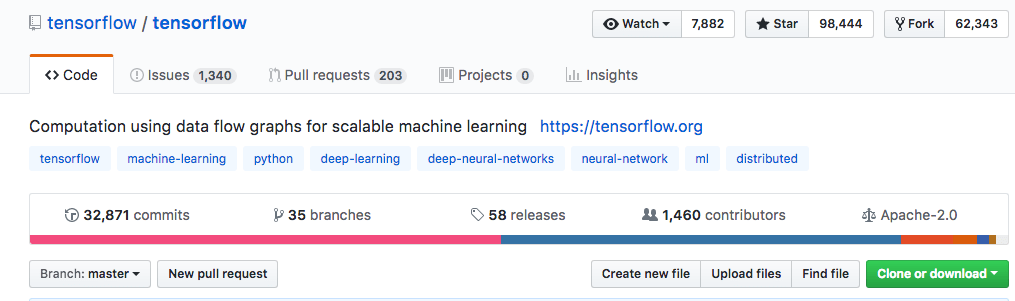
Within a couple of years of its release as an open-source machine learning and deep learning framework, TensorFlow has seen an amazing rate of adoption. Consider the number of stars on its github page: 98+K; look at the number of contributors: 1500+; and observe its growing penetration and pervasiveness in verticals: from medical imaging to gaming; from computer vision to voice recognition and natural language processing.
So it’s no surprise to me as a Program Chair of Spark + AI Summit to see high-caliber technical talks as part of the new tracks related to Deep Learning Techniques. In this blog, we highlight a few talks that caught our eye, in their promise and potential. It always helps to have some navigational guidance if you are new to the summit or technology.
Consider how Salesforce is using Apache Spark and TensorFlow to monitor customer activities in real-time to surface insights. Messrs Alexis Roos and Wenhao Liu will share in their talk, Deep Learning for Natural Language Processing Using Apache Spark and TensorFlow, how to build an LSTM classifier using the TensorFlow framework and combine the deep learning apparatus of TensorFlow with the distributed data processing power of Apache Spark. Using pre-trained Word2Vec embeddings, they reduce the need for large datasets, providing a fast and accurate model for text classification.
Locality Sensitive Hashing(LHS) is a common algorithm to approximate a near neighbor similarity in high dimensional spaces. Using this algorithm with Apache Spark and TensorFlow, Pinterest’s Andrey Gusev in his talk, Image Similarity Detection at Scale Using LSH and TensorFlow, will detail their system how they can detect similarity during their search over billion of items on daily basis.
Now, if you love Tulips and you have been to Holland for this flowery festival, you probably marvel at how Royal Flora Holland automate their auction processes at scale: 100K transactions per day and 400K different types of flowers and plants for their marketplace. No surprise that at the heart of their automated visual detection and operation are Keras and TensorFlow frameworks using deep neural networks and transfer learning. In this fascinating session, Operation Tulip: Using Deep Learning Models to Automate Auction Processes, Rodrigo Agundez will reveal the technical mastery.
Last year at the then Spark Summit, Messrs Andy Feng and Lee Yang introduced TensorFlowOnSpark, leveraging distributed TensorFlow training and inference by using PySpark’s distributed capabilities. Since then this framework has gained traction within the Spark community. This time around, in their talk, TensorFlowOnSpark Enhanced: Scala, Pipelines, and Beyond, they will share their new API for Spark ML pipelines to train TensorFlow models, along with support for Keras API and TensorFlow datasets.
At Databricks we cherish our founders’ academic roots, so all previous summits have had research tracks. Research in technology heralds paradigm shifts—for instance, at UC Berkeley AMPLab, it led to Spark; at Google, it led to TensorFlow. Two academics, Tiark Rompf and Gregory Essertel, from Purdue University, will share their research work on Flare and TensorFlare: Native Compilation for Apache Spark and TensorFlow Pipelines.
And finally, if you’re new to TensorFlow or Keras and want to learn how it all fits in the grand scheme of data and AI, you can enroll in a training course offered both on AWS and Azure: Understand and Apply Deep Learning with Keras, TensorFlow, and Apache Spark. Or to get a cursory and curated Tale of Three Deep Learning Frameworks, attend Brooke Wenig’s and my talk. What’s more, if you want to discern hype from reality about deep learning, check out Sameer Farooqui’s deep-dive session on Separating Hype from Reality in Deep Learning.
What’s Next
You can also peruse and pick from the schedule, too. In the next blog, I will share my picks from related AI use cases, Data Science, and Productionizing Machine Learning sessions.
If you have not registered yet, use JulesPicks code for a $300 discount. See you there!
Read More
Find out 5 Reasons to Attend Spark + AI Summit.
--
Try Databricks for free. Get started today.
The post A Guide to TensorFlow Talks at Spark + AI Summit 2018 appeared first on Databricks.
Nintendo Switch Online Will Have Cloud Saves, Some Old Games

Details on Nintendo’s promised online service for the Switch have been scarce, but now we know that it will mercifully offer cloud saves,…
Click Here to Continue Reading
Update Your Drupal Website Now Or Hackers Might Turn It Into A Cryptocurrency Miner
What is the Latest Version of Ubuntu?
Common HR Department Mistakes and How to Avoid Them
How to Set Alexa as Your Default Digital Assistant on Android
The Best Smart Scales For Dead Simple Weight Tracking

Fitness wearables are hugely popular when it comes to tracking every step you take, but when it comes to monitoring your weight you need a goo…
Click Here to Continue Reading
How to Disable Touch ID or Face ID On Your iPhone
How to Share Large Files Over the Internet
Master Apache Spark™ on the Databricks Unified Analytics Platform Anytime, Anywhere.
Databricks is excited to announce the launch of Databricks Academy self-paced training offerings. Now you can master the Databricks Unified Analytics Platform, powered by Apache Spark™, anytime and anywhere.
About Databricks Academy Self-Paced Training
Databricks self-paced training allows Data Analysts, Data Scientists, and Data Engineers to gain mastery of the Databricks Unified Analytics Platform with in-depth, interactive, self-paced courses. Learn in either a linear fashion by taking all the course lessons together in a single day, or dive into specific topics as you need them for just-in-time learning.
Learn Apache Spark within the Databricks Unified Analytics Platform
What’s unique about the Databricks Academy self-paced courses is that zero setup is required and there is no need to deploy Apache Spark, spin up virtual machines, or log into training environments. Instead, the course content is delivered within instructional cells in Databricks notebooks, allowing you to read, watch, do and then review what you learned all within notebook cells.
Each self-paced course contains lessons with demos and hands-on exercises. Exercises are run within the Databricks Unified Analytics Platform, and provide immediate feedback to check your work. At the end of each course, complete a capstone project to apply what you learn in real-world scenarios.
<Quote from Hatim>
Start Learning
Databricks Academy provides courses developed by industry experts. The three self-paced courses are just the beginning of an all-you-can-eat eLearning library, which will be available as an annual subscription later this year. With new courses added every quarter, you learn about the topics you care about most, on your own time and at your own pace.
Courses Now Available
- Getting Started with Apache Spark™ SQL
- Getting Started with Apache Spark™ DataFrames
- ETL Part 1 – Data Extraction
Start learning now. For a short time, self-paced courses are available at no charge on the Databricks self-paced training website.
--
Try Databricks for free. Get started today.
The post Master Apache Spark™ on the Databricks Unified Analytics Platform Anytime, Anywhere. appeared first on Databricks.
How to Remove the Microsoft Store Icon from the Taskbar in Windows 10
Google's IoT platform Android Things is now available for all developers to build IoT products
How to Switch to a 24-Hour Clock on the Echo Show & Echo Spot
Monday, 7 May 2018
Oculus Go Review: An Impressive Start to Inexpensive VR

The Oculus Go wants to bring VR to the masses. That’s a tougher task than it sounds, though.
